Introduction
This tutorial bridges embodied intelligence research with hands-on OpenHarmony development. It leverages OpenHarmony’s distributed architecture for multi-agent systems and gives participants practical experience with the OpenHarmony educational edition, certified boards, and the MuJoCo–OH-EDU simulation environment.
The tutorial is organized around three modules:
- OpenHarmony Architecture for Embodied Intelligence: distributed architecture, real-time capabilities, and heterogeneous multi-robot coordination.
- Practical Development and Prototyping: hands-on experience with the educational edition and certified boards for rapid, end-to-end prototyping.
- Innovative Experimentation and System Research: OpenHarmony’s open ecosystem and middleware for distributed embodied AI and safety-critical human-robot interaction.
Participants: Around 50 participants are expected. Prior knowledge of operating systems and basic programming concepts is beneficial.
Basic Information
Duration: Half day, afternoon of November 15, 2026
Location: Salon I, Hyatt Hotel, Shatin, Hong Kong
Previous tutorial: March 31, 2025, ASPLOS’25/EuroSys’25, Rotterdam. OpenHarmony OS in System Research: A Practical Guide, with 50 participants.
Organizers
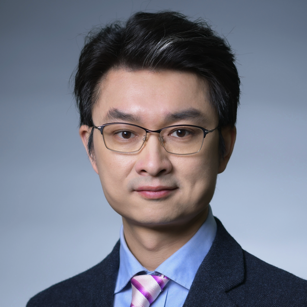
Professor at Shanghai Jiao Tong University and a core member of IPADS. His research focuses on operating systems, computer architecture, and AI, with particular emphasis on model-native operating systems and agent systems for cross-industry applications. His recent projects include MobiAgent, Penglai, XPC, and Catalyzer. Email: xiayubin@sjtu.edu.cn.
Associate Professor and Assistant Dean at Shanghai Sanda University, March 8th Red Banner Pacesetter, Huawei Developer Expert (HDE), and HarmonyOS Pioneer. She specializes in HarmonyOS development, OpenHarmony software-hardware collaboration, and medical data mining. She leads multiple provincial and ministerial projects, has published textbooks, and guides students to win national Class A competition awards. Email: zhuxinrong@sandau.edu.cn.
Invited Speakers and Instructors
Invited speaker. Professor at the Institute of Parallel and Distributed Systems (IPADS), School of Computer Science, Shanghai Jiao Tong University. His research focuses on operating systems, computer architecture, and AI, with particular emphasis on model-native operating systems and agent systems for cross-industry applications. His recent projects include MobiAgent (mobile agent framework), Penglai (RISC-V TEE for secure computing), XPC (fast IPC architecture extension), and Catalyzer (serverless framework with sub-millisecond startup).
Invited speaker. Associate Professor in the Department of Mechanical and Automation Engineering at The Chinese University of Hong Kong, where he joined in 2015. He received his B.Eng. (First Class Honours) and B.CS. from the University of Melbourne in 2008, and his Ph.D. in robotics there in 2014. From 2014 to 2015, he was a postdoctoral research fellow at the Institute of Intelligent Systems and Robotics, University Pierre and Marie Curie, Paris. His research focuses on robot manipulation, including the analysis, design, optimization, and control of novel mechanisms and human-robot teleoperation. His work spans cable-driven parallel robots, bio-inspired robots, building-construction robotics, musculoskeletal robots, and wearable assistive devices.
Invited speaker. Assistant Professor in the School of Computer Science at Peking University. She received her Ph.D. from Carnegie Mellon University and conducted postdoctoral research at the University of California, Berkeley. Her research focuses on embodied AI and multimodal large models. Her work has received more than 31,000 Google Scholar citations, and she received the AAAI 2021 Best Paper Award. She is also the author of Deep Reinforcement Learning, published by Springer Nature, with more than 300,000 global e-book downloads. She serves as an Associate Editor for IEEE RA-L/MTAP and on the senior program committee or as an area chair for AAAI, NeurIPS, and CoRL.
Invited speaker. Tenure-track Assistant Professor at the John Hopcroft Center, School of Computer Science, Shanghai Jiao Tong University. He received his Ph.D. in Computer Science from the University of Manchester and was previously a Research Scientist at Huawei London Research Centre. His research spans multi-agent systems, embodied intelligence, and AI for Science, with a focus on adaptive decision-making for embodied multi-agent systems in open worlds. His work has appeared at ICML, NeurIPS, CoRL, JAIR, and RAL. He received the Championship and Outstanding Performance Award at the IROS 2025 Quadruped Robot Challenge, and the 2025 Best Technical Breakthrough Award at Huawei London Research Centre. He is an Associate Editor for IROS 2026.
Instructor. Associate Professor in the School of Computing and Intelligent Technology, Shanghai Sanda University, and Assistant Dean. She specializes in HarmonyOS development, OpenHarmony software-hardware collaboration, and medical data mining.
Instructor. Senior Engineer in the School of Computing and Intelligent Technology, Shanghai Sanda University; Member of the OpenHarmony Embodied Intelligence PMC; and Leader of the Shanghai Sanda University Huawei ICT Academy.
Agenda
| Time | Topic | Speaker |
|---|---|---|
| 13:30 - 13:35 | Opening | Haibo Chen |
| 13:35 - 13:55 | Invited Talk 1: Breakthroughs and Research Directions in OpenHarmony | Yubin Xia |
| 13:55 - 14:15 | Invited Talk 2: Novel Robots and Human-Interaction for Building Construction and Smart Living | Darwin Lau |
| 14:15 - 14:35 | Invited Talk 3: Multimodal Foundation Model in the Open World | Shanghang Zhang |
| 14:35 - 14:55 | Invited Talk 4: Embodied Multi-Agent Decision-Making for Open Worlds | Yang Li |
| 14:55 - 15:05 | Coffee Break | – |
| 15:05 - 15:50 | Lecture 1 & Exercise 1: Sim-to-Real Frontiers for Embodied Intelligence – Paradigms, Metrics, and Hands-On Deployment with MuJoCo and OH-EDU | Xinrong Zhu |
| 15:50 - 16:35 | Lecture 2 & Exercise 2: OpenHarmony Foundations for Embodied Intelligence – Sim-to-Real Simulation System Design and Verification | Jianmin Xu |
| 16:35 - 17:20 | Lecture 3 & Exercise 3: OH-EDU and MuJoCo Integration – Hardware-Software Co-Control, Joint Debugging, and Remote Control of Physical Devices | Xinrong Zhu |
| 17:20 - 17:30 | Free Discussion | – |
Topics Introduction
Invited Talk 1: Breakthroughs and Research Directions in OpenHarmony
This talk presents the latest OpenHarmony academic breakthroughs, pinpointing critical technical bottlenecks, core algorithmic advances, and future research directions.
Invited Talk 2: Novel Robots and Human-Interaction for Building Construction and Smart Living
The operations of our cities and quality of life are increasingly affected by an ageing workforce and labor shortages, particularly for dangerous or harsh work. This talk introduces cable-driven robots, human-robot interaction techniques, and real-world applications in building construction, utilities maintenance, and assistive devices. It covers reconfigurable mechanisms, underactuated suspended systems, flexible robots, and the advances in mechanism design, kinematics, dynamics, workspace analysis, control, and intelligence needed to operate them in complex environments.
Invited Talk 3: Multimodal Foundation Model in the Open World
Topic abstract to be announced.
Invited Talk 4: Embodied Multi-Agent Decision-Making for Open Worlds
The real world is far more open and complex than idealized laboratory task settings. Environment states shift continuously, the entities an agent interacts with evolve, collaborative relationships are reconfigured on the fly, and task objectives may change over time. For embodied agents, the challenge is to perceive, reason, and decide continuously in uncertain, dynamic, and open environments, while enabling multi-agent systems to form, sustain, and refine effective collaboration. This talk draws on recent work in this direction to discuss what has been achieved and what remains unsolved.
Lecture 1 & Exercise 1: Sim-to-Real Frontiers for Embodied Intelligence
This session reviews cutting-edge sim-to-real research trends and establishes standardized paradigms and evaluation metrics for embodied intelligence simulation. Participants then deploy and configure an academic-grade MuJoCo–OH-EDU simulation environment and master the basic virtual-physical simulation toolchain.
Lecture 2 & Exercise 2: OpenHarmony Foundations for Embodied Intelligence
This session first examines OpenHarmony’s real-time capabilities and multi-device synergy that establish it as a foundational operating system for embodied intelligence. Participants then leverage the MuJoCo–OH-EDU environment to construct a virtual simulation platform, implement control logic, and verify sim-to-real transfer methodologies.
Lecture 3 & Exercise 3: OH-EDU and MuJoCo Integration
This session details the hardware-software co-control architecture and joint debugging workflow that bridges OH-EDU–MuJoCo simulation with physical execution. Participants then practice these end-to-end workflows and remotely control physical devices such as robotic arms through OpenHarmony.